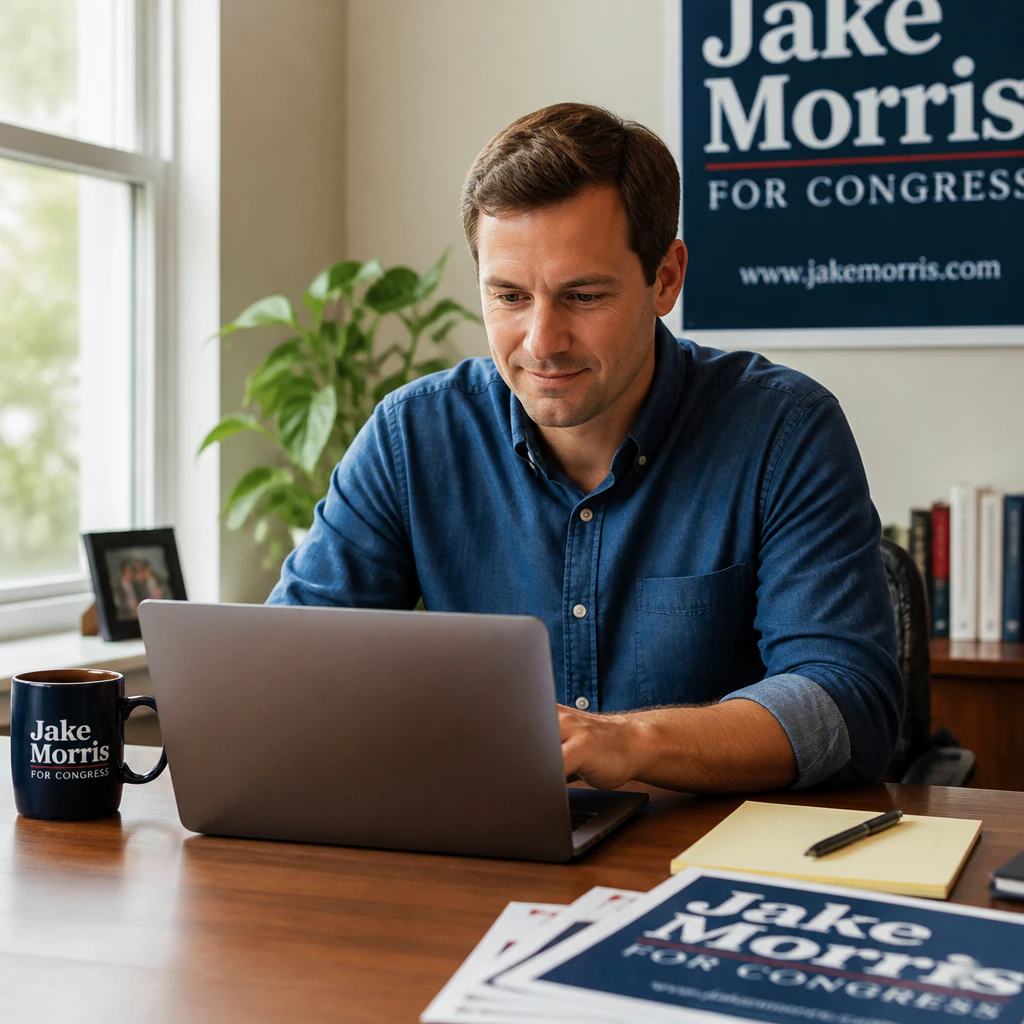
Your Political Brand Could Be Holding You Back — Here’s How to Fix It Before Election Day
Reach Voters
Policies may power politics, but perceptions decide elections. If voters can’t sum up who you are (and why you’re on their side) in a sentence, they’ll fill in the blank with whatever headline or hashtag shouts the loudest. Even solid incumbents risk becoming yesterday’s tabloid if their brand feels dated, confused, or downright forgettable in a media ecosystem that refreshes itself every few seconds.
That’s why a disciplined brand tune-up isn’t cosmetic fluff; it’s core campaign infrastructure. The following eight-week “rebrand sprint” treats your narrative, visuals, and voice like you’d treat field ops or fundraising: as levers you can track, test, and tighten before voters hit the polls. Execute it well, and your identity stops dragging behind.
What Is Image Branding in Politics?
Image branding in politics is the deliberate creation (and continual management) of voters’ mental picture of a candidate, party, or cause.
It weaves together visual symbols (colour palette, logo, wardrobe), verbal cues (slogan, tone of voice), behavioural signals (photo-ops, policy roll-outs), and media placement so that the public instantly “gets” who the actor is, what they stand for and how they make people feel. In short, it’s the political analogue of a commercial brand, focused less on policy PDFs than on perception.
Brand image vs. Brand identity
Identity is the story you intend to tell, your manifesto, logo kit, candidate memo.
Image is the story voters receive, filtered through the press, social media, and lived experience. Successful campaigns keep testing where those two meet and closing any credibility gaps.
Image branding is not a vanity layer; it’s how modern campaigns translate policy into perception, identity into votes. Done well, it delivers three outcomes:
Instant recognition (symbol & slogan signal the brand within a heartbeat).
Emotional alignment (voters feel seen and spoken to).
Reputational resilience (a strong image buffers against attacks and gaffes).
Treat it as a strategic discipline (continuously measured and iterated) not a last-minute coat of paint, and your political story stands a far better chance of surviving the 24-hour news cycle and winning on election day.
How a Weak Brand Image Can Undermine Your Campaign
Branding isn’t just for corporations or influencers. Politicians are also products voters have to believe in before purchasing with their vote. Here’s how a weak image branding strategy can cost you votes:
1. Inconsistency Across Channels
Your social media might be active, but does it match the tone of your website content? Are your yard signs designed with the same color palette as your brochures and digital ads? Inconsistent brand elements—fonts, colors, and logo usage—can dilute your campaign message and lead to confusion about your brand’s identity.
Every touchpoint must feel like it belongs to the same story to build a strong brand image. Whether voters see you on TV, Instagram, or the street, they should instantly recognize your brand based on your established visual and emotional cues.
2. Lack of Clear Positioning
With such a crowded political field, standing out from the rest of the competition is essential. If your brand voice starts to sound like every other candidate’s, you’re missing the chance to be different.
Your campaign needs to be able to answer the following questions:
What do I want my brand to stand for?
What value do I bring to my constituents?
Clarity is the key to successful brand positioning. Without it, voters won’t easily see your brand or feel moved to support it.
3. Misalignment with Your Audience
Are you presenting yourself in a way that resonates with your voters’ issues, values, and needs? Millennials would likely prefer a more modern and dynamic brand with strong digital marketing and interactive content, while older voters may prefer an old-fashioned, polished look with tangible proof of your commitment to the community.
Brand image must resonate with your target audience. If your brand personality does not appeal to the demographic you want to attract, you are likely going to miss out on connections that can be turned into votes.
4. Ignoring Digital Brand Building
People who think their web presence is an afterthought risk being forgotten. Social media marketing, website copy, and digital advertising are now among the most effective ways to shape public perception. If your online brand identity is stale, confusing, and unclear, it affects how voters see your brand, even if your message is sound.
Social media posts, visual identity, and messaging must all align to create a clear brand image. Use social media not just to inform but also to connect on an emotional level with your community. Tell personal stories, respond to comments, and be around frequently. That’s how you build a brand with which people feel at ease.
What Happens When You Build a Positive Brand Image
When your political brand image is consistent, strategic, and authentic, it creates a ripple effect. A strong brand image creates:
More brand recognition
More trust with voters
A more favorable attitude towards your candidacy
More media coverage
More donor engagement
Improved election-day turnout
Like a successful business brand creates loyal customers, a well-developed political brand creates loyal supporters.
How to Repair Your Political Brand
Below are ways your political brand can be fixed before it’s too late.
1. Start With a Brand Audit
Take an inventory of all you’ve built for your campaign, both online and offline. Compare your brand’s image on your website, signage, social media posts, email marketing efforts, and community outreach materials.
Is your message clear and consistent?
Does your visual identity reflect the tone and positioning of your campaign?
Look at how your brand is perceived and how you’d prefer your brand to be perceived. If there’s a disconnect, that’s where you start.
At Reach Voters, we help political candidates measure brand image through digital activity, voter sentiments, and visual alignment. Brand-focused assessment is the foundation for a more effective campaign strategy.
2. Define Your Brand Purpose and Voice
A strong brand identity must be rooted in authenticity. Why are you running? What do you stand for? And most importantly, how do you want voters to feel when they hear your name?
Develop a clear brand voice communicating your values in every post, speech, and marketing content. This will help establish your brand and ensure you speak clearly and confidently.
3. Upgrade Your Visual Identity
This includes your logo, colors, typography, and photo style. You don’t necessarily need a new logo, but you do need a polished and cohesive look. Your visuals should align with your brand personality and enhance the emotional impact of your message.
Remember: image strategy isn’t just about aesthetics. A good brand image influences how voters compare brands (or candidates) and can sway undecided voters at the ballot box.
4. Refine Your Messaging to Resonate With Voters
Does your current messaging speak to your constituents’ lived experiences? Does it reflect your target market’s values, hopes, and fears?
Your campaign message should reflect what your product or service, in this case, your leadership, provides. Speak directly to the issues that matter most. Address community challenges with empathy and offer real solutions.
Great marketing strategies don’t just promote—they connect. Use language that builds brand loyalty and cultivates a favorable attitude toward your campaign.
5. Leverage Digital Marketing Tools
Digital marketing is a powerful tool for increasing brand recognition. Use social media to share your values, celebrate community wins, and showcase your daily work.
Don’t forget to prioritize mobile-friendly website design. Most voters will first encounter your campaign through a smartphone screen. Make sure your website and social platforms tell the same cohesive story.
At Reach Voters, our services help clients position themselves in the market through thoughtful website and social strategy, data-driven insights, and customized brand development campaigns.
Political Branding Is Emotional, Not Just Strategic
In marketing, Kotler’s principles point to a brand’s emotional dimensions. The same is true in politics. Facts and emotions are the basis of voters’ decisions. Your image branding must create a sense of trust, hope, and confidence. It should make them feel seen, heard, and represented.
With Election Day looming, every word, every picture, and every impression counts. Your brand gets your message from door to door, screen to screen, and heart to heart. Don’t let outdated materials, muddled messages, or scattered imagery define how voters see you. Instead, take control of your brand image, refine it, strengthen it, and make it speak to your audience.
You have only one chance to make a first impression. Make sure your brand stands for something solid and that your voters know what that something is.
Need Help With Political Branding?
At Reach Voters, we specialize in helping candidates build a winning brand image that brings trust, attracts supporters, and stands out among the competition. Check our services to see how we can help you create a strong political brand before Election Day.

We Strategize
To provide effective political marketing strategies.
Reach Voters is a full-service digital marketing agency based in Miami. Our digital team provides digital strategy consulting for political campaigns and candidates.
This mode enables people with epilepsy to use the website safely by eliminating the risk of seizures that result from flashing or blinking animations and risky color combinations.
Visually Impaired Mode
Improves website's visuals
This mode adjusts the website for the convenience of users with visual impairments such as Degrading Eyesight, Tunnel Vision, Cataract, Glaucoma, and others.
Cognitive Disability Mode
Helps to focus on specific content
This mode provides different assistive options to help users with cognitive impairments such as Dyslexia, Autism, CVA, and others, to focus on the essential elements of the website more easily.
ADHD Friendly Mode
Reduces distractions and improve focus
This mode helps users with ADHD and Neurodevelopmental disorders to read, browse, and focus on the main website elements more easily while significantly reducing distractions.
Blindness Mode
Allows using the site with your screen-reader
This mode configures the website to be compatible with screen-readers such as JAWS, NVDA, VoiceOver, and TalkBack. A screen-reader is software for blind users that is installed on a computer and smartphone, and websites must be compatible with it.
Online Dictionary
Readable Experience
Content Scaling
Default
Text Magnifier
Readable Font
Dyslexia Friendly
Highlight Titles
Highlight Links
Font Sizing
Default
Line Height
Default
Letter Spacing
Default
Left Aligned
Center Aligned
Right Aligned
Visually Pleasing Experience
Dark Contrast
Light Contrast
Monochrome
High Contrast
High Saturation
Low Saturation
Adjust Text Colors
Adjust Title Colors
Adjust Background Colors
Easy Orientation
Mute Sounds
Hide Images
Hide Emoji
Reading Guide
Stop Animations
Reading Mask
Highlight Hover
Highlight Focus
Big Dark Cursor
Big Light Cursor
Cognitive Reading
Virtual Keyboard
Navigation Keys
Voice Navigation
Accessibility Statement
reachvoters.com
June 12, 2026
Compliance status
We firmly believe that the internet should be available and accessible to anyone, and are committed to providing a website that is accessible to the widest possible audience,
regardless of circumstance and ability.
To fulfill this, we aim to adhere as strictly as possible to the World Wide Web Consortium’s (W3C) Web Content Accessibility Guidelines 2.1 (WCAG 2.1) at the AA level.
These guidelines explain how to make web content accessible to people with a wide array of disabilities. Complying with those guidelines helps us ensure that the website is accessible
to all people: blind people, people with motor impairments, visual impairment, cognitive disabilities, and more.
This website utilizes various technologies that are meant to make it as accessible as possible at all times. We utilize an accessibility interface that allows persons with specific
disabilities to adjust the website’s UI (user interface) and design it to their personal needs.
Additionally, the website utilizes an AI-based application that runs in the background and optimizes its accessibility level constantly. This application remediates the website’s HTML,
adapts Its functionality and behavior for screen-readers used by the blind users, and for keyboard functions used by individuals with motor impairments.
If you’ve found a malfunction or have ideas for improvement, we’ll be happy to hear from you. You can reach out to the website’s operators by using the following email
Screen-reader and keyboard navigation
Our website implements the ARIA attributes (Accessible Rich Internet Applications) technique, alongside various different behavioral changes, to ensure blind users visiting with
screen-readers are able to read, comprehend, and enjoy the website’s functions. As soon as a user with a screen-reader enters your site, they immediately receive
a prompt to enter the Screen-Reader Profile so they can browse and operate your site effectively. Here’s how our website covers some of the most important screen-reader requirements,
alongside console screenshots of code examples:
Screen-reader optimization: we run a background process that learns the website’s components from top to bottom, to ensure ongoing compliance even when updating the website.
In this process, we provide screen-readers with meaningful data using the ARIA set of attributes. For example, we provide accurate form labels;
descriptions for actionable icons (social media icons, search icons, cart icons, etc.); validation guidance for form inputs; element roles such as buttons, menus, modal dialogues (popups),
and others. Additionally, the background process scans all the website’s images and provides an accurate and meaningful image-object-recognition-based description as an ALT (alternate text) tag
for images that are not described. It will also extract texts that are embedded within the image, using an OCR (optical character recognition) technology.
To turn on screen-reader adjustments at any time, users need only to press the Alt+1 keyboard combination. Screen-reader users also get automatic announcements to turn the Screen-reader mode on
as soon as they enter the website.
These adjustments are compatible with all popular screen readers, including JAWS and NVDA.
Keyboard navigation optimization: The background process also adjusts the website’s HTML, and adds various behaviors using JavaScript code to make the website operable by the keyboard. This includes the ability to navigate the website using the Tab and Shift+Tab keys, operate dropdowns with the arrow keys, close them with Esc, trigger buttons and links using the Enter key, navigate between radio and checkbox elements using the arrow keys, and fill them in with the Spacebar or Enter key.Additionally, keyboard users will find quick-navigation and content-skip menus, available at any time by clicking Alt+1, or as the first elements of the site while navigating with the keyboard. The background process also handles triggered popups by moving the keyboard focus towards them as soon as they appear, and not allow the focus drift outside it.
Users can also use shortcuts such as “M” (menus), “H” (headings), “F” (forms), “B” (buttons), and “G” (graphics) to jump to specific elements.
Disability profiles supported in our website
Epilepsy Safe Mode: this profile enables people with epilepsy to use the website safely by eliminating the risk of seizures that result from flashing or blinking animations and risky color combinations.
Visually Impaired Mode: this mode adjusts the website for the convenience of users with visual impairments such as Degrading Eyesight, Tunnel Vision, Cataract, Glaucoma, and others.
Cognitive Disability Mode: this mode provides different assistive options to help users with cognitive impairments such as Dyslexia, Autism, CVA, and others, to focus on the essential elements of the website more easily.
ADHD Friendly Mode: this mode helps users with ADHD and Neurodevelopmental disorders to read, browse, and focus on the main website elements more easily while significantly reducing distractions.
Blindness Mode: this mode configures the website to be compatible with screen-readers such as JAWS, NVDA, VoiceOver, and TalkBack. A screen-reader is software for blind users that is installed on a computer and smartphone, and websites must be compatible with it.
Keyboard Navigation Profile (Motor-Impaired): this profile enables motor-impaired persons to operate the website using the keyboard Tab, Shift+Tab, and the Enter keys. Users can also use shortcuts such as “M” (menus), “H” (headings), “F” (forms), “B” (buttons), and “G” (graphics) to jump to specific elements.
Additional UI, design, and readability adjustments
Font adjustments – users, can increase and decrease its size, change its family (type), adjust the spacing, alignment, line height, and more.
Color adjustments – users can select various color contrast profiles such as light, dark, inverted, and monochrome. Additionally, users can swap color schemes of titles, texts, and backgrounds, with over seven different coloring options.
Animations – person with epilepsy can stop all running animations with the click of a button. Animations controlled by the interface include videos, GIFs, and CSS flashing transitions.
Content highlighting – users can choose to emphasize important elements such as links and titles. They can also choose to highlight focused or hovered elements only.
Audio muting – users with hearing devices may experience headaches or other issues due to automatic audio playing. This option lets users mute the entire website instantly.
Cognitive disorders – we utilize a search engine that is linked to Wikipedia and Wiktionary, allowing people with cognitive disorders to decipher meanings of phrases, initials, slang, and others.
Additional functions – we provide users the option to change cursor color and size, use a printing mode, enable a virtual keyboard, and many other functions.
Browser and assistive technology compatibility
We aim to support the widest array of browsers and assistive technologies as possible, so our users can choose the best fitting tools for them, with as few limitations as possible. Therefore, we have worked very hard to be able to support all major systems that comprise over 95% of the user market share including Google Chrome, Mozilla Firefox, Apple Safari, Opera and Microsoft Edge, JAWS and NVDA (screen readers).
Notes, comments, and feedback
Despite our very best efforts to allow anybody to adjust the website to their needs. There may still be pages or sections that are not fully accessible, are in the process of becoming accessible, or are lacking an adequate technological solution to make them accessible. Still, we are continually improving our accessibility, adding, updating and improving its options and features, and developing and adopting new technologies. All this is meant to reach the optimal level of accessibility, following technological advancements. For any assistance, please reach out to