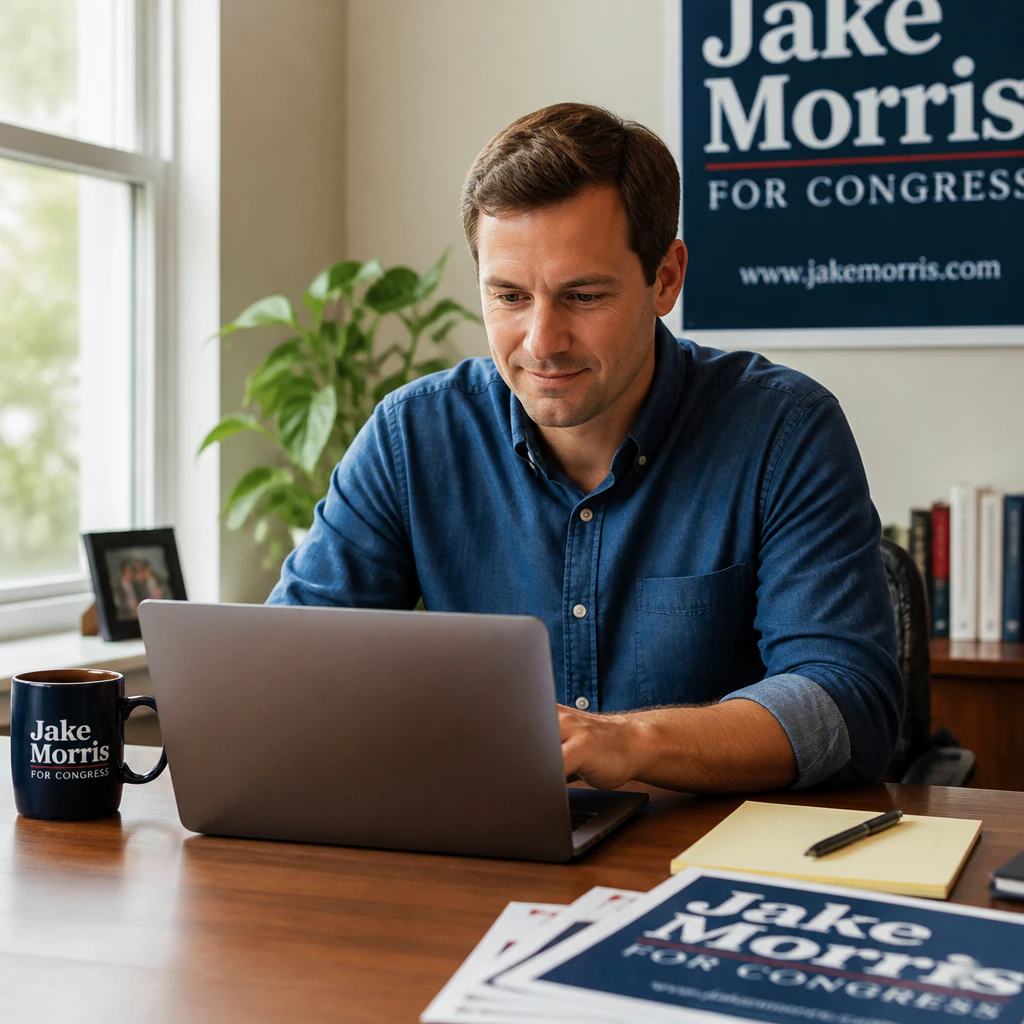
From Zero to Hero: Financing Tips for Launching a Successful Political Campaign
Reach Voters
In 2016, the average presidential campaign raised tens of millions of dollars, but the most resilient campaigns weren’t just the ones with big checks. They were the ones who built diversified, compliant financing systems that combined small donors, strategic spending, and smart use of public resources.
That statistic isn’t just about the money. It’s about structure. A campaign that starts with nothing can become competitive if it follows a clear roadmap for raising, managing, and deploying funds. Whether you’re running for local office, a federal candidate, or advising a presidential candidate, mastering campaign finance is the difference between a campaign that sputters and one that wins.
AtReach Voters, we help political campaigns translate money into momentum, integrating digital strategy, grassroots outreach, and finance-smart decisions so campaigns can win where it matters most: with voters. This guide breaks down how to go from zero to hero in campaign fundraising, spending, legal compliance, and leveraging public and private money wisely.

Political Campaign Finance Basics & Why It Matters
Every successful political campaign begins with understanding the rules of the playing field: the campaign finance system, the role of money in politics, and how funding choices affect credibility, reach, and resilience.
1. Campaign contributions
Money given by individuals, political action committees (PACs), political party committees, or the candidate’s funds. Federal law (enforced by the Federal Election Commission or FEC) caps individual contributions to federal candidates and requires disclosure to limit corruption and increase transparency.
2. Public financing
Some campaigns, especially at presidential or certain state/local levels, can opt into systems where public funds match and multiply small donations, reducing dependence on big donors and dark money.
3. Big money vs. small donor strategy
The Brennan Center for Justice has advocated small donor public financing, where modest contributions are matched to amplify grassroots support, effectively countering outsized influence from wealthy interests.
4. Legal framework
The Federal Election Campaign Act of 1971 (FECA) and subsequent decisions like Buckley v. Valeo shaped what can be raised, spent, and limited in campaigns; it balanced contribution limits with First Amendment considerations for expenditures.
Money isn’t just “what you spend.” It shapes who the campaign listens to, where attention goes, and whether the campaign can sustain through a full election cycle. The 2016 presidential election showed stark contrasts in how campaigns raised, allocated, and leveraged funds, highlighting that spending without a strategy often underperforms.
Techniques For Raising Funds For A Political Campaign
Start by building a base of small-dollar supporters. Early in a campaign, asking many ordinary voters for modest amounts creates momentum, demonstrates viability, and makes later asks easier. Use email, social media, and targeted digital outreach to tell a concise story about why the campaign matters, then invite people to contribute.
When those small contributions are matched through public or internal matching programs, the psychological and financial impact multiplies, turning a $10 gift into substantially more power for the campaign. Small donor public financing systems like the multiple-match models championed by the Brennan Center for Justice show that campaigns fueled this way can compete without overreliance on wealthy interests, and matching dramatically amplifies grassroots energy.
Parallel to grassroots giving, cultivate larger individual donors, aligned political party committees, and permissible outside groups. Early conversations with mid- and high-tier contributors help cover startup costs and provide a bridge while broader outreach scales.
Recent trends show high-profile campaigns placing heavy emphasis on digital fundraising and list-building well ahead of formal launches, using those tools to both raise money and expand name recognition.
Public financing, when available, should be evaluated early because it changes the dynamic of fundraising. Participating candidates who qualify can turn demonstrated grassroots support into amplified resources, often receiving multiple dollars in public match for each small contribution. Well-designed public programs reduce dependence on big money and help the campaign focus outreach on real voters instead of chasing large checks.
Historical precedent and recent implementations in places like New York show both the empowering potential and the challenges when public matching rules shift; keeping an eye on developments and safeguarding the integrity of small-donor emphasis is important.
Small donors build credibility and momentum. Programs that match and multiply small contributions have proven effective in shifting candidate behavior away from reliance on big money, especially in jurisdictions adopting small donor public financing.
Tactics:
Recurring micro-donations via email and SMS campaigns.
Grassroots events (house parties, meet-and-greets) tied with easy mobile contribution prompts.
“Donate $5 and help us unlock $25 in matching funds,” framing where public or internal matching is available.
While small donors drive narrative and base, political party committees and well-aligned PACs can provide scalable cash infusions. Be mindful of coordination rules and emerging legal shifts, such as current high-profile challenges to limits on party spending that the Supreme Court is set to hear in the upcoming term, which could reshape how parties coordinate and spend with candidates.
If your campaign is eligible (e.g., certain presidential, state, or local systems), seriously evaluate opting into public financing programs. These systems often require meeting thresholds showing grassroots support in exchange for block grants, multiple matching, or voucher-style public participation.
“Dark money” refers to funding that flows through entities that don’t disclose their donors, weakening transparency. While some independent expenditures are legally permissible, campaigns must distance themselves from opaque outside influence or risk credibility damage.

Where to Allocate Funds to Win
Raising is necessary; spending smartly wins:
Early voter contact: Invest in data, field infrastructure, and digital advertising to identify persuasion and turnout targets.
Digital ads and microtargeting: A blended approach (social, search, mobile) from a coordinated team like the one at Reach Voters ensures “money for political” outreach reaches voters efficiently.
Compliance infrastructure: Budget for regular audits, reporting tools, and legal counsel. Being proactive avoids fines or disclosure scandals.
Reserve for late-stage pushes: General election campaigns often require surges in advertising, GOTV (get-out-the-vote) spend, and rapid response. Plan in the budget.
The backbone of sustainable political fundraising is compliance. Federal campaign finance law, enforced by the FEC, comes with strict rules on campaign contributions and lobbying, limits on campaign contributions, disclosure timing, and the separation of coordinated vs. independent expenditures.
Critical compliance checkpoints:
Contribution limits: Know who can give, how much, and from where (e.g., individual caps, prohibition on foreign national contributions).
Reporting deadlines: File timely finance reports; missing them triggers penalties and undermines donor trust.
Public financing agreements: If participating in public funding, understand the trade-offs, often including caps or restrictions in exchange for funding.
Supreme Court precedents: Decisions like Buckley v. Valeo still inform what regulations survive constitutional scrutiny, especially regarding expenditures and free speech.
Financing a political campaign is simultaneously technical, strategic, and political. From understanding federal campaign finance law to tapping into small donor public financing, every dollar should be a vote-earning investment.
The most successful campaigns are those that design their campaign finance system to reflect their values. If that’s reducing reliance on big money, maximizing grassroots participation, or responsibly deploying public funding to amplify legitimacy.
If you’re launching a campaign and starting from zero, you don’t have to go it alone.Reach Voters builds tailored, in-house digital strategy and finance-aware campaign operations that help you raise money, stay compliant, and spend it where it counts, so you can win on your terms.
Start smart. Raise strategically. Win decisively.

We Strategize
To provide effective political marketing strategies.
Reach Voters is a full-service digital marketing agency based in Miami. Our digital team provides digital strategy consulting for political campaigns and candidates.
This mode enables people with epilepsy to use the website safely by eliminating the risk of seizures that result from flashing or blinking animations and risky color combinations.
Visually Impaired Mode
Improves website's visuals
This mode adjusts the website for the convenience of users with visual impairments such as Degrading Eyesight, Tunnel Vision, Cataract, Glaucoma, and others.
Cognitive Disability Mode
Helps to focus on specific content
This mode provides different assistive options to help users with cognitive impairments such as Dyslexia, Autism, CVA, and others, to focus on the essential elements of the website more easily.
ADHD Friendly Mode
Reduces distractions and improve focus
This mode helps users with ADHD and Neurodevelopmental disorders to read, browse, and focus on the main website elements more easily while significantly reducing distractions.
Blindness Mode
Allows using the site with your screen-reader
This mode configures the website to be compatible with screen-readers such as JAWS, NVDA, VoiceOver, and TalkBack. A screen-reader is software for blind users that is installed on a computer and smartphone, and websites must be compatible with it.
Online Dictionary
Readable Experience
Content Scaling
Default
Text Magnifier
Readable Font
Dyslexia Friendly
Highlight Titles
Highlight Links
Font Sizing
Default
Line Height
Default
Letter Spacing
Default
Left Aligned
Center Aligned
Right Aligned
Visually Pleasing Experience
Dark Contrast
Light Contrast
Monochrome
High Contrast
High Saturation
Low Saturation
Adjust Text Colors
Adjust Title Colors
Adjust Background Colors
Easy Orientation
Mute Sounds
Hide Images
Hide Emoji
Reading Guide
Stop Animations
Reading Mask
Highlight Hover
Highlight Focus
Big Dark Cursor
Big Light Cursor
Cognitive Reading
Virtual Keyboard
Navigation Keys
Voice Navigation
Accessibility Statement
reachvoters.com
June 12, 2026
Compliance status
We firmly believe that the internet should be available and accessible to anyone, and are committed to providing a website that is accessible to the widest possible audience,
regardless of circumstance and ability.
To fulfill this, we aim to adhere as strictly as possible to the World Wide Web Consortium’s (W3C) Web Content Accessibility Guidelines 2.1 (WCAG 2.1) at the AA level.
These guidelines explain how to make web content accessible to people with a wide array of disabilities. Complying with those guidelines helps us ensure that the website is accessible
to all people: blind people, people with motor impairments, visual impairment, cognitive disabilities, and more.
This website utilizes various technologies that are meant to make it as accessible as possible at all times. We utilize an accessibility interface that allows persons with specific
disabilities to adjust the website’s UI (user interface) and design it to their personal needs.
Additionally, the website utilizes an AI-based application that runs in the background and optimizes its accessibility level constantly. This application remediates the website’s HTML,
adapts Its functionality and behavior for screen-readers used by the blind users, and for keyboard functions used by individuals with motor impairments.
If you’ve found a malfunction or have ideas for improvement, we’ll be happy to hear from you. You can reach out to the website’s operators by using the following email
Screen-reader and keyboard navigation
Our website implements the ARIA attributes (Accessible Rich Internet Applications) technique, alongside various different behavioral changes, to ensure blind users visiting with
screen-readers are able to read, comprehend, and enjoy the website’s functions. As soon as a user with a screen-reader enters your site, they immediately receive
a prompt to enter the Screen-Reader Profile so they can browse and operate your site effectively. Here’s how our website covers some of the most important screen-reader requirements,
alongside console screenshots of code examples:
Screen-reader optimization: we run a background process that learns the website’s components from top to bottom, to ensure ongoing compliance even when updating the website.
In this process, we provide screen-readers with meaningful data using the ARIA set of attributes. For example, we provide accurate form labels;
descriptions for actionable icons (social media icons, search icons, cart icons, etc.); validation guidance for form inputs; element roles such as buttons, menus, modal dialogues (popups),
and others. Additionally, the background process scans all the website’s images and provides an accurate and meaningful image-object-recognition-based description as an ALT (alternate text) tag
for images that are not described. It will also extract texts that are embedded within the image, using an OCR (optical character recognition) technology.
To turn on screen-reader adjustments at any time, users need only to press the Alt+1 keyboard combination. Screen-reader users also get automatic announcements to turn the Screen-reader mode on
as soon as they enter the website.
These adjustments are compatible with all popular screen readers, including JAWS and NVDA.
Keyboard navigation optimization: The background process also adjusts the website’s HTML, and adds various behaviors using JavaScript code to make the website operable by the keyboard. This includes the ability to navigate the website using the Tab and Shift+Tab keys, operate dropdowns with the arrow keys, close them with Esc, trigger buttons and links using the Enter key, navigate between radio and checkbox elements using the arrow keys, and fill them in with the Spacebar or Enter key.Additionally, keyboard users will find quick-navigation and content-skip menus, available at any time by clicking Alt+1, or as the first elements of the site while navigating with the keyboard. The background process also handles triggered popups by moving the keyboard focus towards them as soon as they appear, and not allow the focus drift outside it.
Users can also use shortcuts such as “M” (menus), “H” (headings), “F” (forms), “B” (buttons), and “G” (graphics) to jump to specific elements.
Disability profiles supported in our website
Epilepsy Safe Mode: this profile enables people with epilepsy to use the website safely by eliminating the risk of seizures that result from flashing or blinking animations and risky color combinations.
Visually Impaired Mode: this mode adjusts the website for the convenience of users with visual impairments such as Degrading Eyesight, Tunnel Vision, Cataract, Glaucoma, and others.
Cognitive Disability Mode: this mode provides different assistive options to help users with cognitive impairments such as Dyslexia, Autism, CVA, and others, to focus on the essential elements of the website more easily.
ADHD Friendly Mode: this mode helps users with ADHD and Neurodevelopmental disorders to read, browse, and focus on the main website elements more easily while significantly reducing distractions.
Blindness Mode: this mode configures the website to be compatible with screen-readers such as JAWS, NVDA, VoiceOver, and TalkBack. A screen-reader is software for blind users that is installed on a computer and smartphone, and websites must be compatible with it.
Keyboard Navigation Profile (Motor-Impaired): this profile enables motor-impaired persons to operate the website using the keyboard Tab, Shift+Tab, and the Enter keys. Users can also use shortcuts such as “M” (menus), “H” (headings), “F” (forms), “B” (buttons), and “G” (graphics) to jump to specific elements.
Additional UI, design, and readability adjustments
Font adjustments – users, can increase and decrease its size, change its family (type), adjust the spacing, alignment, line height, and more.
Color adjustments – users can select various color contrast profiles such as light, dark, inverted, and monochrome. Additionally, users can swap color schemes of titles, texts, and backgrounds, with over seven different coloring options.
Animations – person with epilepsy can stop all running animations with the click of a button. Animations controlled by the interface include videos, GIFs, and CSS flashing transitions.
Content highlighting – users can choose to emphasize important elements such as links and titles. They can also choose to highlight focused or hovered elements only.
Audio muting – users with hearing devices may experience headaches or other issues due to automatic audio playing. This option lets users mute the entire website instantly.
Cognitive disorders – we utilize a search engine that is linked to Wikipedia and Wiktionary, allowing people with cognitive disorders to decipher meanings of phrases, initials, slang, and others.
Additional functions – we provide users the option to change cursor color and size, use a printing mode, enable a virtual keyboard, and many other functions.
Browser and assistive technology compatibility
We aim to support the widest array of browsers and assistive technologies as possible, so our users can choose the best fitting tools for them, with as few limitations as possible. Therefore, we have worked very hard to be able to support all major systems that comprise over 95% of the user market share including Google Chrome, Mozilla Firefox, Apple Safari, Opera and Microsoft Edge, JAWS and NVDA (screen readers).
Notes, comments, and feedback
Despite our very best efforts to allow anybody to adjust the website to their needs. There may still be pages or sections that are not fully accessible, are in the process of becoming accessible, or are lacking an adequate technological solution to make them accessible. Still, we are continually improving our accessibility, adding, updating and improving its options and features, and developing and adopting new technologies. All this is meant to reach the optimal level of accessibility, following technological advancements. For any assistance, please reach out to