Modern elections are highly organized processes. Successful campaigns are rarely put together at the last minute. Instead, they move through clearly defined phases that guide fundraising, messaging, and voter turnout from start to finish.
A phase-based strategy provides a clear way to organize these activities. This approach helps campaigns allocate resources more effectively, maintain consistent messaging, and improve voter outreach.
At Reach Voters, we help campaigns stay connected with voters at every stage of the process. We have developed tools that help campaigns communicate effectively, stay connected with voters, and stay organized from launch through Election Day.
 Who Needs a Phase-Based Campaign Strategy
 Who Needs a Phase-Based Campaign Strategy
Timing is everything in a political campaign. The initial phase focuses on fundraising, which provides the campaign with the resources needed to compete. The next phase focuses on persuasion—shaping how voters view the candidate and clearly communicating the campaign’s message.
The final phase focuses on mobilizing supporters and ensuring they turn out to vote. This process becomes even more important in large campaigns, such as presidential or major federal elections.
These campaigns must comply with strict FEC rules, follow campaign finance regulations, and stay connected with voters through digital media, volunteers, and traditional campaign outreach.
Not all campaigns are massive, but most are competitive—and almost all benefit from a clear campaign strategy.
1. People Contesting in Competitive Elections
Any candidate running for president, Congress, or even a local office should structure their campaign in phases. Large elections, such as the race for the presidency, require large amounts of money, complex voter engagement, and significant compliance with campaign finance laws. Without a phase-based campaign strategy, there is a risk of campaign confusion and spending money at the wrong time.
Even local races—such as a campaign for city council—require funding, communication, and voter engagement well before Election Day.
2. Political Parties and Political Committees
Political parties and campaign committees are among the major political actors that rely heavily on phased campaign strategies. National political parties and those at the state level often manage dozens of races simultaneously. Each of these races typically follows the same structured campaign process.
Political parties and campaign committees operate under strict regulations. Fundraising efforts are subject to FEC regulations and reporting requirements. This is why campaign teams must carefully plan fundraising timelines and reporting.
Phased campaign strategies help political parties and political campaign committees coordinate and manage multiple races.
3. Campaign Managers and Professional Consultants
Professional campaign teams benefit greatly from a structured timeline. Campaign managers, digital strategists, and voter outreach teams all benefit from a clear campaign timeline.
For example, field operations teams often focus on persuasion earlier in the campaign, while turnout efforts take center stage closer to Election Day.
Reach Voters is already working with some campaign management teams, providing them with outreach platforms and other communication and voter contact technology. We can help your team get started.
4. Advocacy Groups and Political Organisations
Political organisations that support political candidates or political initiatives also benefit from the phase-based political campaign strategy. The advocacy campaigns are often run alongside a candidate’s outreach efforts.
These phases help advocacy groups reach voters at critical points in the election cycle and engage those who are passionate about the issues involved.
How a Phase-Based Political Campaign Strategy Actually Works
A political campaign strategy typically follows a series of phases, each with a different objective. These phases allow campaigns to build momentum gradually while remaining compliant with campaign finance laws.
The phases involved in a political campaign strategy include fundraising and infrastructure, persuasion, and voter turnout.
Phase One – Fundraising and Campaign Infrastructure
The first phase focuses on building the foundation the campaign needs to operate. Before persuasion or voter turnout efforts begin, the campaign must establish a solid foundation—including an organized team, financial resources, and key staff.
The first and most important thing in this phase is fundraising. Fundraising is very important in modern-day campaigns, and this is especially true in the initial stages. Early fundraising helps demonstrate the campaign’s viability while providing the financial resources needed to compete. Without initial fundraising success, even the most viable candidate may not be able to compete in the general election.
At this phase, the campaign also establishes a formal campaign committee, which is then responsible for the management of compliance and financial reports. Campaign finance reports are closely scrutinized by opponents and the media, which makes accurate reporting essential.
At this phase, the campaign also starts the process of building its internal team. Campaigns may start with a small team, but several key roles must be filled early.
The basic leadership team usually includes:
- Campaign manager: Who will be responsible for the overall strategy and decision-making
- Finance director: Who will deal with fundraising and donor relationships
- Communications director: Who will deal with the campaign message and media relations
- Field director: Who will organize voter outreach and other operations
As the campaign develops and grows, campaign staff can be added to assist with voter outreach and other operations, particularly in terms of digital outreach and other activities that can support the campaign. These roles often expand as the campaign grows, especially as it approaches the general election.
Campaign infrastructure can also include voter communication systems and data platforms. Successful campaigns increasingly depend on digital outreach and voter engagement tools. Reach Voters provides tools that help campaigns build these systems and stay in consistent contact with voters.
This is also the point at which the campaign begins to develop its overall strategy in terms of political action and voter engagement. They will look at voter behavior and study voting in U.S. elections and use political science research to better understand voter behavior and decision-making so that they can develop their campaign message and outreach strategy accordingly.
Phase Two: Persuasion and Voter Communication
The second phase of any political campaign process, after the infrastructure has been built, is the stage of persuasion. During this stage, candidates spend more time on the campaign trail while the campaign focuses on building support and refining its message.
For many people working on the campaign, this stage of the process is the one that they will be most familiar with. This is the stage when candidates spend more time meeting voters and speaking publicly about their policy positions. This is also when the candidate spends more time on the campaign trail raising public awareness.
It is also the stage where the campaign will be working towards making the message more defined and more targeted towards the voter. The campaign team analyzes voter data to better understand how different groups respond to messaging. It is also the stage where the campaign will be working towards making the voter understand the importance of the race and how it will be impacting the primary election, as this stage becomes more defined and more important as the race for the primary election begins to take shape.
One of the more important factors for the people working on the campaign will be the data analysis. The campaign analyzes voter data to better understand how different groups respond to messaging and outreach efforts.
Contemporary persuasion activities depend, to a significant extent, on direct communication with voters. Campaign communication strategies may include the following:
- Political advertisements, which may involve digital advertisements, television, and radio
- Voter communication, which may involve sending texts, emails, and social media communications
- Earned media, which is generated through interviews, news coverage, and public appearances
At this stage, the role of professional political consultants may become more significant in determining the strategy. The consultants help the campaigns in their messaging, analyzing the polls, and organizing the media strategy based on their expertise in working in different election environments.
For more prominent campaigns, the persuasion activities may involve the coordination of a number of teams. The teams may include the communications team, which is responsible for the messaging and media appearances, and the field team, which is responsible for the voter communication and organizing the events.
The teams may work together under the leadership of the campaigns to have effective campaign management.
Phase Three: Voter Mobilization and Voter Turnout
 Phase Three: Voter Mobilization and Voter Turnout
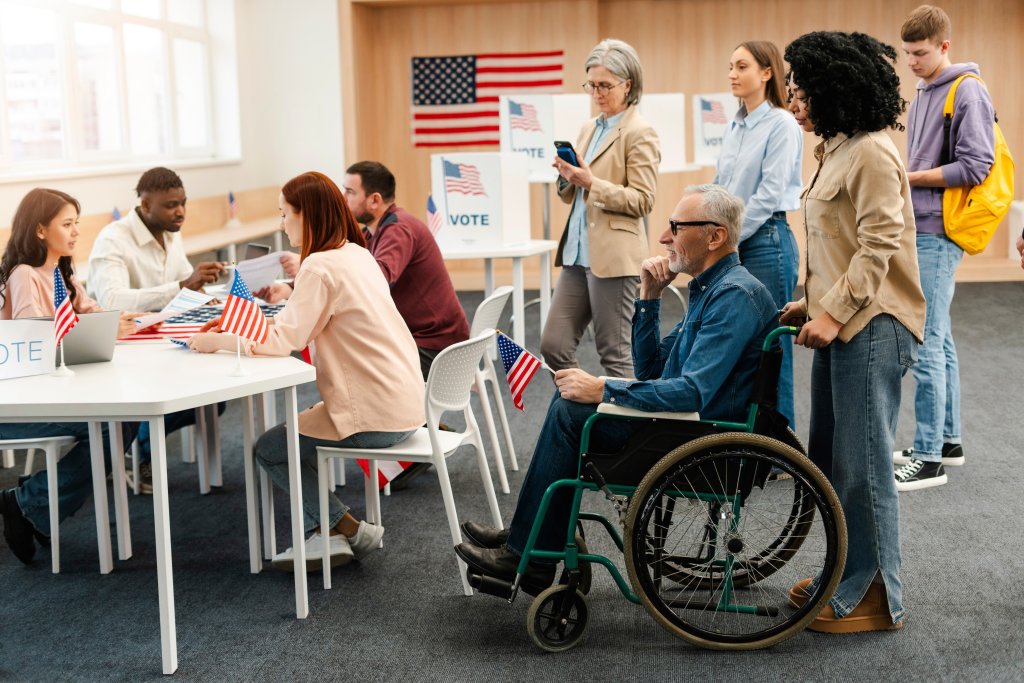
This phase occurs just before the federal election.
At this stage, the campaign shifts its focus to voter turnout.
- The campaign has already identified the supporters of the candidate. The primary objective is to ensure supporters turn out to vote.
- The process to achieve this objective is called the turnout operation.
- This effort must be carefully organized to ensure supporters are reminded to vote.
The timing has to be perfect so that the supporters are reminded to vote at the most appropriate time. For example, the supporters may be reminded to vote before the federal election, or they may be reminded to vote using absentee ballots.
Technology has a big part to play in this process too, with the help of platforms such as those provided by Reach Voters.
The last few days before the federal election may be the most intense part of the campaign process. The campaigns may try to contact all the supporters who might vote for them, and the volume of the contacts may be much higher than before.
The Function of Compliance and Political Campaign Finance Regulations
A phase-based campaign strategy must always operate within election law.
The FEC has the responsibility to regulate campaign finance for federal races, which includes the limits on contributions, the need to report, and the amounts that can be spent.
A structured phase-based campaign can help to avoid issues with compliance because the phases are structured to receive contributions, spend money, and report the contributions and spending in a timely manner. When the campaign has a good strategy, the finance team can keep track of the contributions they receive and file their reports accurately.
Professional campaign support organizations can be helpful in developing the appropriate methods to get the message out to the voters, which will be in compliance with the federal regulations regarding elections.
Why Phase-Based Political Campaign Strategies Work
Campaigns with well-structured strategies are more likely to succeed than those without one. There are various advantages associated with the use of a phase-based strategy.
First, it helps candidates use campaign resources more effectively. The resources of the campaign are limited, and spending them too early on the road can hurt the campaign at a later stage.
Second, it helps the politician to reinforce the political message. The efforts to persuade the voters are made at a specific stage of the campaign. Third, it increases voter engagement. The voter outreach ensures that the voter receives the message at the right time.
Lastly, it can be used for the turnout operation. By the day of the election, the campaign will know the people who have voted for the candidate and will be able to encourage them to vote.
Campaign outreach platforms, such as those provided by the Reach Voters team, make it easier for candidates to manage campaign phases and keep messaging consistent with supporters.