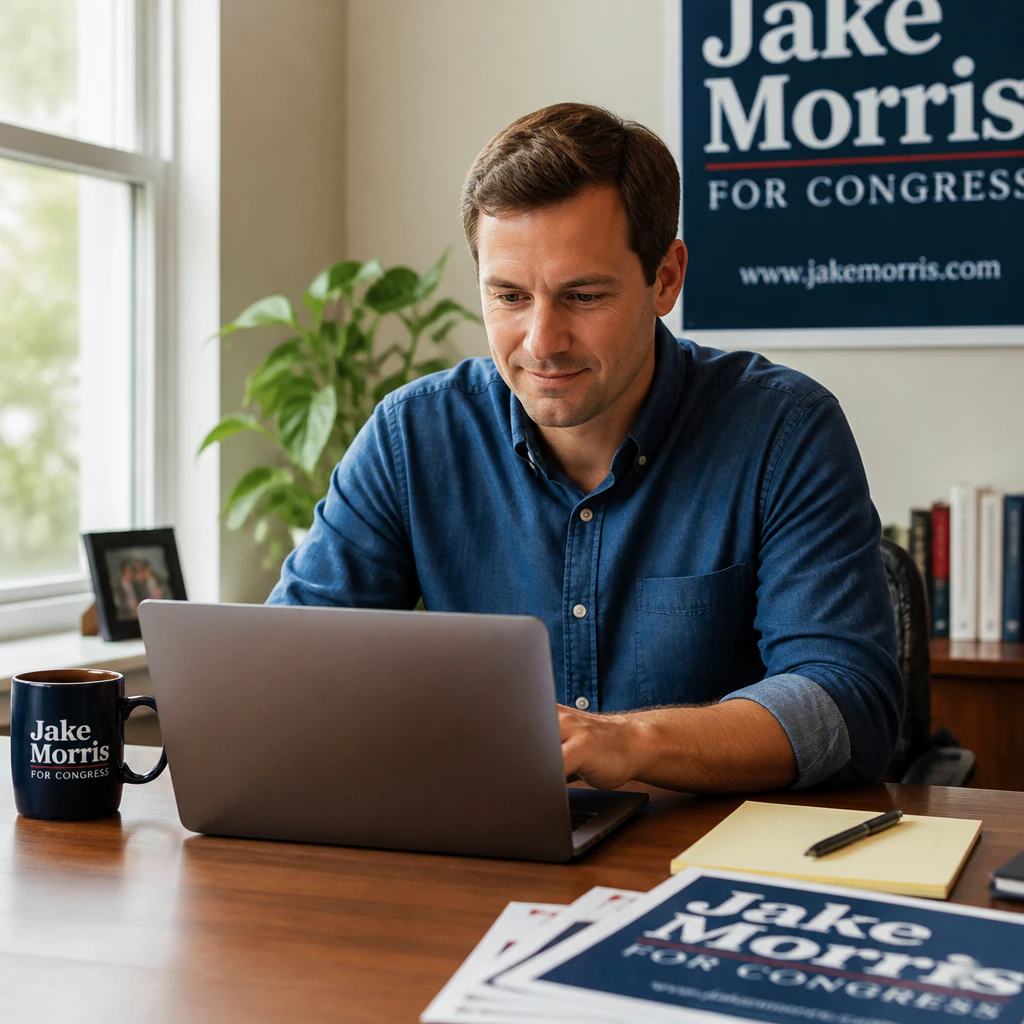
Harness the Power of SEO Marketing to Dominate the Digital Political Landscape
Reach Voters
We live in a digital age, and the internet significantly impacts our daily lives. From small businesses to political campaigns, everyone is transitioning from traditional methods to digital platforms.
In this context, what was once a simple buzzword, SEO, has now become a critical tool to steer the tide in anyone’s favor, even for political campaigns. Capitalizing on the essence of SEO marketing strategies can drastically transform your political campaign’s digital presence and make it more powerful than before. Here’s how.
The Role Of SEO In Politics
Search Engine Optimization (SEO) essentially designs your website or content in such a way that search engines like Google can easily pick up the data. Better SEO means better visibility online, and in contemporary politics, online visibility can directly translate into a more extensive outreach, a move that can make or break a campaign.
When a user puts in a specific query, the search engine returns the most relevant results. As a political organization, if your website content is well-optimized, chances are your website will appear among the first few searches, giving you more visibility and the potential to connect with a larger voter base.

Leveraging Modern SEO Tactics For Political Advantage
SEO’s role doesn’t stop at making your website appear in search results; it also plays a fundamental part in shaping public opinion, providing political education, and encouraging political participation. Over the past decade, many political campaigns have effectively employed SEO strategies to boost their outreach and persuade undecided voters.
Here are some of the ways SEO marketing can help your political campaign:
1. Keyword Targeting
Identifying and targeting the right keywords can attract potential voters. For instance, consider optimizing website content with phrases like ‘political party in [your area]’, ‘election promises’, and ‘candidate bios’. Essentially, these are the words and phrases that closely relate to your campaign and that your potential supporters are likely to search.
2. Content Creation
Quality content is king in the digital world. Regularly updating the website with relevant blog posts, infographics, and videos will not only keep the audience engaged but will also pose you as an authority figure in your respective political sphere, thus boosting your SEO ranking.
3. User Experience (UX)
A well-built website that’s easy to navigate will create a positive user experience, making your audience stay and explore more, which can eventually lead to better rankings.
4. Social Media Integration
Leveraging social media platforms can dramatically amplify your reach. Social media platforms act as an effective link-building source, which is a significant part of SEO strategies. Political campaigns can use platforms like Twitter or Facebook to drive support and increase website traffic, positively impacting the campaign’s SEO score.
The Intersection of SEO and Politics
Politics has always been about the message and the medium. As our mediums have shifted from town hall meetings and paper pamphlets to digital screens and social platforms, the methods to convey political messages have significantly evolved. Search engine optimization (SEO) is one such modern method, standing at the crossroads of technology and politics, wielding the power to dictate who gets heard and who fades into obscurity online.
SEO is the script that determines who gets the spotlight. Keywords tailored to search intent and stories that resonate with the electorate have led to landslide victories. SEO is a double-edged sword; it can both craft and shift public perception. Through organic search results, politicians can spread their message far and wide, impacting voter behavior subtly yet significantly.
With Google handling 3.5 billion searches daily, mastering search engine optimization ensures that your political message dominates the conversation. A mix of local SEO, on-page tactics, and engaging content places politicians directly in voters’ line of sight on SERPs.
SEO in politics is not just about ranking higher; it’s about connecting, influencing, and winning hearts and minds one search at a time.

Building an SEO Strategy for Political Campaigns
Politics in SEO requires a multifaceted approach. Here are some of the strategic elements that can amplify a political message:
Targeted Keyword Strategy: Identifying keywords that resonate with the electorate ensures your message hits home. Use tools to research and track terms that align with your political goals, enhancing visibility in search results.
Tailored Content Creation: Speak directly to the hearts of your constituents. Create compelling, relevant content that addresses local issues, aspirations, and concerns. This personalized approach not only boosts organic search but deepens voter relationships.
On-Page SEO for Platforms: Optimize your political website with meta descriptions, strategic keywords, and user-friendly navigation. Ensure your digital platform is a welcoming space for voters seeking information.
Off-Page SEO Tactics: Extend your reach beyond your website through backlinking strategies, social media engagement, and influencer collaborations. This broadens your visibility, bringing your political message to a wider audience.
Embrace these SEO strategies to ensure your political campaign not only participates in but dominates the digital arena.
Leveraging SEO For Political Issues And Advocacy
For political candidates, it’s essential to measure how effective their SEO strategies are in reaching and persuading voters. Analytics can provide deep insights into the success of different tactics and can help campaigns refine their approach over time, focusing on what truly resonates.
While SEO is powerful, it also raises questions of ethical use in politics. Transparency in message sourcing, accuracy of information portrayed, and adherence to the best SEO practices are crucial in maintaining an ethical balance.
Here’s how to use SEO to amplify your advocacy:
Spotlighting Critical Issues: Pinpoint keywords that align with your cause. Whether it’s climate change or healthcare reform, ranking for these terms can place your issue at the forefront of the digital debate. Use engaging content to educate and stir action.
SEO for Fundraising and Donor Engagement: Tailor your content to appeal to potential donors. Highlight the impact of contributions through SEO-optimized stories and results. An effective SEO marketing strategy ensures your call to action doesn’t just reach ears but opens wallets.
SEO-Friendly Issue-Based Landing Pages: Develop dedicated pages for each of your advocacy topics. Incorporate clear, compelling meta descriptions and use keywords that reflect search intent. This makes it easier for like-minded supporters to find you online and join your cause.
Equip your campaign with tools like Google Analytics and SEMrush. With just a few clicks, you can track keywords and monitor ranking progress, getting a clear view of your digital standing. Integrate dashboards that decode complex data into actionable insights. Use these analytics to understand voter behavior and refine your messaging, steering your campaign in the right direction.
SEO isn’t set-and-forget. Review your data regularly to adjust tactics and ensure your content marketing efforts resonate with evolving search queries and terms. Monitor the competition and optimize accordingly to maintain an edge. Analytics inform strategy; wield them to sculpt your SEO marketing into a precision engine for mobilizing and engaging voters.
The intersection of SEO and politics is both influential and necessary in the digital age. Effective SEO strategies can lead to increased visibility, better communication with voters, and more successful political campaigns.
As the digital landscape continues to evolve, the combination of savvy political messages and smart SEO practices will increasingly decide who wins the race to top search results – and possibly elections.
Gear up for the digital age of political communication by embracing the strategic alliance of SEO and politics, where visibility is a new victory.

We Strategize
To provide effective political marketing strategies.
Reach Voters is a full-service digital marketing agency based in Miami. Our digital team provides digital strategy consulting for political campaigns and candidates.
This mode enables people with epilepsy to use the website safely by eliminating the risk of seizures that result from flashing or blinking animations and risky color combinations.
Visually Impaired Mode
Improves website's visuals
This mode adjusts the website for the convenience of users with visual impairments such as Degrading Eyesight, Tunnel Vision, Cataract, Glaucoma, and others.
Cognitive Disability Mode
Helps to focus on specific content
This mode provides different assistive options to help users with cognitive impairments such as Dyslexia, Autism, CVA, and others, to focus on the essential elements of the website more easily.
ADHD Friendly Mode
Reduces distractions and improve focus
This mode helps users with ADHD and Neurodevelopmental disorders to read, browse, and focus on the main website elements more easily while significantly reducing distractions.
Blindness Mode
Allows using the site with your screen-reader
This mode configures the website to be compatible with screen-readers such as JAWS, NVDA, VoiceOver, and TalkBack. A screen-reader is software for blind users that is installed on a computer and smartphone, and websites must be compatible with it.
Online Dictionary
Readable Experience
Content Scaling
Default
Text Magnifier
Readable Font
Dyslexia Friendly
Highlight Titles
Highlight Links
Font Sizing
Default
Line Height
Default
Letter Spacing
Default
Left Aligned
Center Aligned
Right Aligned
Visually Pleasing Experience
Dark Contrast
Light Contrast
Monochrome
High Contrast
High Saturation
Low Saturation
Adjust Text Colors
Adjust Title Colors
Adjust Background Colors
Easy Orientation
Mute Sounds
Hide Images
Hide Emoji
Reading Guide
Stop Animations
Reading Mask
Highlight Hover
Highlight Focus
Big Dark Cursor
Big Light Cursor
Cognitive Reading
Virtual Keyboard
Navigation Keys
Voice Navigation
Accessibility Statement
reachvoters.com
June 12, 2026
Compliance status
We firmly believe that the internet should be available and accessible to anyone, and are committed to providing a website that is accessible to the widest possible audience,
regardless of circumstance and ability.
To fulfill this, we aim to adhere as strictly as possible to the World Wide Web Consortium’s (W3C) Web Content Accessibility Guidelines 2.1 (WCAG 2.1) at the AA level.
These guidelines explain how to make web content accessible to people with a wide array of disabilities. Complying with those guidelines helps us ensure that the website is accessible
to all people: blind people, people with motor impairments, visual impairment, cognitive disabilities, and more.
This website utilizes various technologies that are meant to make it as accessible as possible at all times. We utilize an accessibility interface that allows persons with specific
disabilities to adjust the website’s UI (user interface) and design it to their personal needs.
Additionally, the website utilizes an AI-based application that runs in the background and optimizes its accessibility level constantly. This application remediates the website’s HTML,
adapts Its functionality and behavior for screen-readers used by the blind users, and for keyboard functions used by individuals with motor impairments.
If you’ve found a malfunction or have ideas for improvement, we’ll be happy to hear from you. You can reach out to the website’s operators by using the following email
Screen-reader and keyboard navigation
Our website implements the ARIA attributes (Accessible Rich Internet Applications) technique, alongside various different behavioral changes, to ensure blind users visiting with
screen-readers are able to read, comprehend, and enjoy the website’s functions. As soon as a user with a screen-reader enters your site, they immediately receive
a prompt to enter the Screen-Reader Profile so they can browse and operate your site effectively. Here’s how our website covers some of the most important screen-reader requirements,
alongside console screenshots of code examples:
Screen-reader optimization: we run a background process that learns the website’s components from top to bottom, to ensure ongoing compliance even when updating the website.
In this process, we provide screen-readers with meaningful data using the ARIA set of attributes. For example, we provide accurate form labels;
descriptions for actionable icons (social media icons, search icons, cart icons, etc.); validation guidance for form inputs; element roles such as buttons, menus, modal dialogues (popups),
and others. Additionally, the background process scans all the website’s images and provides an accurate and meaningful image-object-recognition-based description as an ALT (alternate text) tag
for images that are not described. It will also extract texts that are embedded within the image, using an OCR (optical character recognition) technology.
To turn on screen-reader adjustments at any time, users need only to press the Alt+1 keyboard combination. Screen-reader users also get automatic announcements to turn the Screen-reader mode on
as soon as they enter the website.
These adjustments are compatible with all popular screen readers, including JAWS and NVDA.
Keyboard navigation optimization: The background process also adjusts the website’s HTML, and adds various behaviors using JavaScript code to make the website operable by the keyboard. This includes the ability to navigate the website using the Tab and Shift+Tab keys, operate dropdowns with the arrow keys, close them with Esc, trigger buttons and links using the Enter key, navigate between radio and checkbox elements using the arrow keys, and fill them in with the Spacebar or Enter key.Additionally, keyboard users will find quick-navigation and content-skip menus, available at any time by clicking Alt+1, or as the first elements of the site while navigating with the keyboard. The background process also handles triggered popups by moving the keyboard focus towards them as soon as they appear, and not allow the focus drift outside it.
Users can also use shortcuts such as “M” (menus), “H” (headings), “F” (forms), “B” (buttons), and “G” (graphics) to jump to specific elements.
Disability profiles supported in our website
Epilepsy Safe Mode: this profile enables people with epilepsy to use the website safely by eliminating the risk of seizures that result from flashing or blinking animations and risky color combinations.
Visually Impaired Mode: this mode adjusts the website for the convenience of users with visual impairments such as Degrading Eyesight, Tunnel Vision, Cataract, Glaucoma, and others.
Cognitive Disability Mode: this mode provides different assistive options to help users with cognitive impairments such as Dyslexia, Autism, CVA, and others, to focus on the essential elements of the website more easily.
ADHD Friendly Mode: this mode helps users with ADHD and Neurodevelopmental disorders to read, browse, and focus on the main website elements more easily while significantly reducing distractions.
Blindness Mode: this mode configures the website to be compatible with screen-readers such as JAWS, NVDA, VoiceOver, and TalkBack. A screen-reader is software for blind users that is installed on a computer and smartphone, and websites must be compatible with it.
Keyboard Navigation Profile (Motor-Impaired): this profile enables motor-impaired persons to operate the website using the keyboard Tab, Shift+Tab, and the Enter keys. Users can also use shortcuts such as “M” (menus), “H” (headings), “F” (forms), “B” (buttons), and “G” (graphics) to jump to specific elements.
Additional UI, design, and readability adjustments
Font adjustments – users, can increase and decrease its size, change its family (type), adjust the spacing, alignment, line height, and more.
Color adjustments – users can select various color contrast profiles such as light, dark, inverted, and monochrome. Additionally, users can swap color schemes of titles, texts, and backgrounds, with over seven different coloring options.
Animations – person with epilepsy can stop all running animations with the click of a button. Animations controlled by the interface include videos, GIFs, and CSS flashing transitions.
Content highlighting – users can choose to emphasize important elements such as links and titles. They can also choose to highlight focused or hovered elements only.
Audio muting – users with hearing devices may experience headaches or other issues due to automatic audio playing. This option lets users mute the entire website instantly.
Cognitive disorders – we utilize a search engine that is linked to Wikipedia and Wiktionary, allowing people with cognitive disorders to decipher meanings of phrases, initials, slang, and others.
Additional functions – we provide users the option to change cursor color and size, use a printing mode, enable a virtual keyboard, and many other functions.
Browser and assistive technology compatibility
We aim to support the widest array of browsers and assistive technologies as possible, so our users can choose the best fitting tools for them, with as few limitations as possible. Therefore, we have worked very hard to be able to support all major systems that comprise over 95% of the user market share including Google Chrome, Mozilla Firefox, Apple Safari, Opera and Microsoft Edge, JAWS and NVDA (screen readers).
Notes, comments, and feedback
Despite our very best efforts to allow anybody to adjust the website to their needs. There may still be pages or sections that are not fully accessible, are in the process of becoming accessible, or are lacking an adequate technological solution to make them accessible. Still, we are continually improving our accessibility, adding, updating and improving its options and features, and developing and adopting new technologies. All this is meant to reach the optimal level of accessibility, following technological advancements. For any assistance, please reach out to