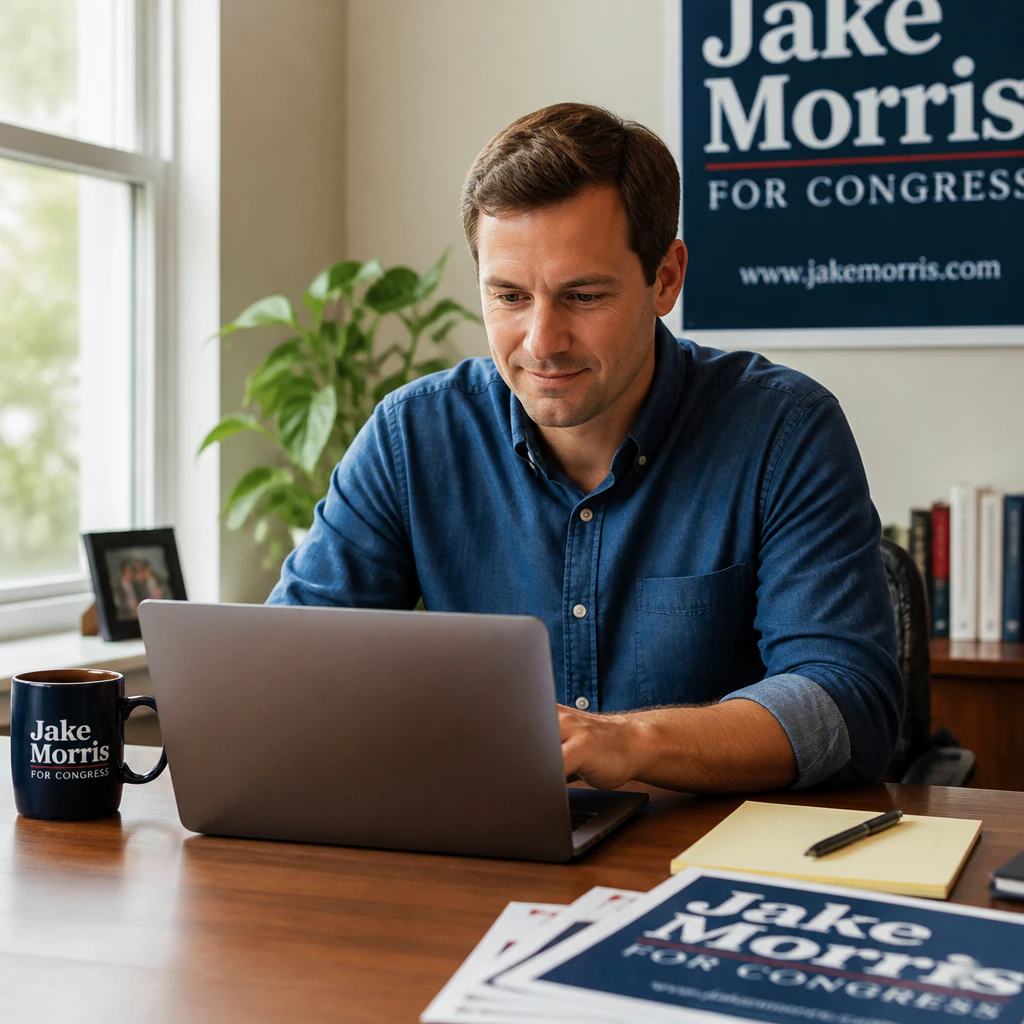
Don’t Let Your Political Campaign Fail, Hire A Public Relations Specialist To Handle Crisis Management
Reach Voters
It begins with a single objectionable headline. A misconstrued quote, a Facebook-viral video, or an untimely tweet. What would have been a great campaign is turned into a PR nightmare within hours. The team of the candidate scramble to react but the damage diffuses quicker than they can react.
The study by Pew Research Center (2024) indicates that almost 68 percent of adults in the United States receive political news mostly through social media, where knowledge circulates in real-time and is usually inaccessible to context. Even the slightest communication fault in that setting may end up being a big crisis before the campaign can send a reply.
Political campaigns are won and lost on the perceptions of the people. Any slip, and months of planning and millions of advertising funds can be thrown down the drain. That is why a public relations specialist is not only smart, but a necessity.
The moment a crisis strikes, an experienced PR expert will help you manage the story, restore confidence, and salvage the image of the campaign before it is too late.

Learning To Play The High Stakes Of Political Campaigns
Politics has been personalized, and now more than ever the stakes are greater. Social media, 24 hours news and citizen journalism imply that all messages are made public, all words documented, and all slip magnified. Crisis management can no longer be considered as a side factor in a campaign team.
A proper PR strategy may contribute to campaigns being able to predict and manage the attention of the masses. It is not only about putting out fire but rather about making and maintaining a good image in the eyes of the people, and is complicated. This image defines whether the people consider a candidate to be trustworthy, competent and relatable.
The Bureau of Labor statistics suggests that PR specialists are some of the fastest-growing professionals in the communication field in the country. Their professional development is expected to be quite active and justified by the growing significance of the organization’s communication with the population. The campaigns that realize this fact make crisis preparedness a DNA component. The price is paid by those who are not frequent.
What A Public Relations Specialist Does
The PR specialist is not a spokesperson. They are the bridges between your campaign versus the people in general. They strive to build and sustain a continuous positive media image of their customers, comprising of the political candidates and their organizations.
Routine activities include:
Composing press releases and arranging discussions with journalists to get the press to report correctly.
Communication through development of social media to influence the mindset of masses.
Making talking points and statements to use during media interviews and debates.
Give advice on communication tone and time of communication in sensitive matters.
Speed, strategy, and calmness are necessitated in a campaign setting among PR people. When there is controversy, they are the first ones to react – write statements, brief talking heads, and go to the press in order to put the discussion back on track.
Crisis Management: The Bedrock Of Political PR
It is crisis management where the skill set of PR expert comes into play. Whether it is a policy slip up, a personal attack or a viral meme, the answer has to be swift, coordinated, and genuine. The significant actions in the process of political crisis management would normally involve:
Evaluation: Having an idea of what is happening, who is involved and how the story is propagating.
Message Control: The version of writing a concise and consistent message on the matter without fueling the fire.
Public Reassurance: Press releases and online platforms to support the perception of the population in order to strengthen the values of the campaigns.
Follow-Up: Watching continued sentiment and changing tack as the story progresses.
The most successful campaigns do not develop their approach until a crisis sets in. They make early investments in public relations activities- such as media training, scenario planning, and social listening which they are able to respond with confidence when the unexpected occurs.
Why Campaigns Fail: It Worked without Proper Public Relations.
The majority of campaigns are run on the belief that either the good policy or the well run ground operation will be adequate. They lose track that the opinion of the people is not made up on facts; it is made up on perception. Some of the most frequent errors which result to failure are:
Slow reaction to breaking stories or negative news coverage.
Poor consistency in communication between personnel, representatives and channels.
Inability to show empathy in social utterances on sensitive matters.
Lack of coordination with the media specialists and communication teams.
These gaps opening bring the story out of control. The voters lose confidence, the donors go away, and the opponents take advantage of the situation.
The Learning And Knowledge Behind PR Pros
PR professionals will usually require a bachelors degree usually in communication, PR or Legal. Most of them begin their work as interns in agencies or campaign, where they get to know how to write, organize events, and conduct media outreach.
Both the Public Relations Society of America and the Public Relations Student Society of America are well organized societies with resources and mentorship to those studying and interested in a career in public relations. These two organizations indicate the ethical and strategic feature of the field which are highly significant in terms of politics.
The major competencies that any PR specialist needs:
Good communication and oratory skills.
Human relations skills in sustaining relationships with journalists, employees, and stakeholders.
Handling of crisis and pressure situations.
Knowledge media relations and effectiveness in responding to questions.
Soft skills consist of emotional intelligence, adaptability and discretion.
A PR specialist role is far beyond writing. They are obliged to build and sustain a good image in the press, handle complicated stories and ensure all the messages are relevant to the work and objectives of the client.
Building A Campaign That Can Withstand The Unexpected
A PR-less campaign is a ship without a rudder: Once the storms come there is no way of sailing, just responding.
Moreover, in case of an issue, PR experts should ensure that the staff is well-informed about how to act. They influence the opinion of the mass media, control relations work, and organize information on all levels.
Whenever voters experience consistent and transparent communication, they tend to have trust- even during the most challenging times. That is what sustains the campaigns.
The following is the way a PR specialist makes a campaign strong:
Anticipation: Scouting the possible problems prior to their development.
Preparation: The creation of speaking notes, crisis manuals, and templates of rapid-responses.
Action: Being the head of the reaction to the campaign professionally and calmly.
Reinforcement: Continuing on the same so that the reputation of the campaign is sustained over a long process.
This aggressive communication strategy enables the campaign to have a good image among the people even when subjected to intensive scrutiny.
Lessons From Real Campaigns
There are numerous lessons of crisis management in history. There are examples of candidates who overcame scandalous situations due to the efforts of their teams to take immediate action, accept the blame, and re-orient people on solutions.
Other people were blinded by warning signs, brushed off popular anxieties, or contradicted themselves and paid with their campaigns.
It is usually reduced to PR strategy. Individuals that possess competent media relations professionals to lead the communication can gracefully shift. The unprivileged tend to have their reputations destroyed.

Why It Is Important To Hire The Right PR Specialist
All PR specialists are not similar. A good PR expert on a political campaign possesses a unique combination of experience, intuition and calmness. They are familiar with the art of persuasion and the truth of common criticism.
In the selection of one, campaigns must seek:
Strong experience in dealing with sensitive matters in stressful situations.
Good writing and oratory abilities.
Effective insight into the policy that is held by the masses and its interaction with perception.
The capability to come up with social media programs that support campaign messages.
Association with recognized professional organisations, such as PRSA.
An effective campaign does not occur by chance, but it is established with deliberation, strategy and confidence. Trust, in politics, is fragile. All statements, all events, all posts on the Internet are a part of the picture of a candidate.
Hiring PR specialist is not a cost, but a commitment to strength. It makes sure that your campaign is able to react, recuperate and proceed with a feeling of confidence.
When the crisis strikes, and, sooner or later, it will strike, you will be happy to have a PR professional to defend your message and save your good name.
Due to the fact that in politics it is not only about getting votes. It is about winning the trust of the masses, and maintaining it.

We Strategize
To provide effective political marketing strategies.
Reach Voters is a full-service digital marketing agency based in Miami. Our digital team provides digital strategy consulting for political campaigns and candidates.
This mode enables people with epilepsy to use the website safely by eliminating the risk of seizures that result from flashing or blinking animations and risky color combinations.
Visually Impaired Mode
Improves website's visuals
This mode adjusts the website for the convenience of users with visual impairments such as Degrading Eyesight, Tunnel Vision, Cataract, Glaucoma, and others.
Cognitive Disability Mode
Helps to focus on specific content
This mode provides different assistive options to help users with cognitive impairments such as Dyslexia, Autism, CVA, and others, to focus on the essential elements of the website more easily.
ADHD Friendly Mode
Reduces distractions and improve focus
This mode helps users with ADHD and Neurodevelopmental disorders to read, browse, and focus on the main website elements more easily while significantly reducing distractions.
Blindness Mode
Allows using the site with your screen-reader
This mode configures the website to be compatible with screen-readers such as JAWS, NVDA, VoiceOver, and TalkBack. A screen-reader is software for blind users that is installed on a computer and smartphone, and websites must be compatible with it.
Online Dictionary
Readable Experience
Content Scaling
Default
Text Magnifier
Readable Font
Dyslexia Friendly
Highlight Titles
Highlight Links
Font Sizing
Default
Line Height
Default
Letter Spacing
Default
Left Aligned
Center Aligned
Right Aligned
Visually Pleasing Experience
Dark Contrast
Light Contrast
Monochrome
High Contrast
High Saturation
Low Saturation
Adjust Text Colors
Adjust Title Colors
Adjust Background Colors
Easy Orientation
Mute Sounds
Hide Images
Hide Emoji
Reading Guide
Stop Animations
Reading Mask
Highlight Hover
Highlight Focus
Big Dark Cursor
Big Light Cursor
Cognitive Reading
Virtual Keyboard
Navigation Keys
Voice Navigation
Accessibility Statement
reachvoters.com
June 12, 2026
Compliance status
We firmly believe that the internet should be available and accessible to anyone, and are committed to providing a website that is accessible to the widest possible audience,
regardless of circumstance and ability.
To fulfill this, we aim to adhere as strictly as possible to the World Wide Web Consortium’s (W3C) Web Content Accessibility Guidelines 2.1 (WCAG 2.1) at the AA level.
These guidelines explain how to make web content accessible to people with a wide array of disabilities. Complying with those guidelines helps us ensure that the website is accessible
to all people: blind people, people with motor impairments, visual impairment, cognitive disabilities, and more.
This website utilizes various technologies that are meant to make it as accessible as possible at all times. We utilize an accessibility interface that allows persons with specific
disabilities to adjust the website’s UI (user interface) and design it to their personal needs.
Additionally, the website utilizes an AI-based application that runs in the background and optimizes its accessibility level constantly. This application remediates the website’s HTML,
adapts Its functionality and behavior for screen-readers used by the blind users, and for keyboard functions used by individuals with motor impairments.
If you’ve found a malfunction or have ideas for improvement, we’ll be happy to hear from you. You can reach out to the website’s operators by using the following email
Screen-reader and keyboard navigation
Our website implements the ARIA attributes (Accessible Rich Internet Applications) technique, alongside various different behavioral changes, to ensure blind users visiting with
screen-readers are able to read, comprehend, and enjoy the website’s functions. As soon as a user with a screen-reader enters your site, they immediately receive
a prompt to enter the Screen-Reader Profile so they can browse and operate your site effectively. Here’s how our website covers some of the most important screen-reader requirements,
alongside console screenshots of code examples:
Screen-reader optimization: we run a background process that learns the website’s components from top to bottom, to ensure ongoing compliance even when updating the website.
In this process, we provide screen-readers with meaningful data using the ARIA set of attributes. For example, we provide accurate form labels;
descriptions for actionable icons (social media icons, search icons, cart icons, etc.); validation guidance for form inputs; element roles such as buttons, menus, modal dialogues (popups),
and others. Additionally, the background process scans all the website’s images and provides an accurate and meaningful image-object-recognition-based description as an ALT (alternate text) tag
for images that are not described. It will also extract texts that are embedded within the image, using an OCR (optical character recognition) technology.
To turn on screen-reader adjustments at any time, users need only to press the Alt+1 keyboard combination. Screen-reader users also get automatic announcements to turn the Screen-reader mode on
as soon as they enter the website.
These adjustments are compatible with all popular screen readers, including JAWS and NVDA.
Keyboard navigation optimization: The background process also adjusts the website’s HTML, and adds various behaviors using JavaScript code to make the website operable by the keyboard. This includes the ability to navigate the website using the Tab and Shift+Tab keys, operate dropdowns with the arrow keys, close them with Esc, trigger buttons and links using the Enter key, navigate between radio and checkbox elements using the arrow keys, and fill them in with the Spacebar or Enter key.Additionally, keyboard users will find quick-navigation and content-skip menus, available at any time by clicking Alt+1, or as the first elements of the site while navigating with the keyboard. The background process also handles triggered popups by moving the keyboard focus towards them as soon as they appear, and not allow the focus drift outside it.
Users can also use shortcuts such as “M” (menus), “H” (headings), “F” (forms), “B” (buttons), and “G” (graphics) to jump to specific elements.
Disability profiles supported in our website
Epilepsy Safe Mode: this profile enables people with epilepsy to use the website safely by eliminating the risk of seizures that result from flashing or blinking animations and risky color combinations.
Visually Impaired Mode: this mode adjusts the website for the convenience of users with visual impairments such as Degrading Eyesight, Tunnel Vision, Cataract, Glaucoma, and others.
Cognitive Disability Mode: this mode provides different assistive options to help users with cognitive impairments such as Dyslexia, Autism, CVA, and others, to focus on the essential elements of the website more easily.
ADHD Friendly Mode: this mode helps users with ADHD and Neurodevelopmental disorders to read, browse, and focus on the main website elements more easily while significantly reducing distractions.
Blindness Mode: this mode configures the website to be compatible with screen-readers such as JAWS, NVDA, VoiceOver, and TalkBack. A screen-reader is software for blind users that is installed on a computer and smartphone, and websites must be compatible with it.
Keyboard Navigation Profile (Motor-Impaired): this profile enables motor-impaired persons to operate the website using the keyboard Tab, Shift+Tab, and the Enter keys. Users can also use shortcuts such as “M” (menus), “H” (headings), “F” (forms), “B” (buttons), and “G” (graphics) to jump to specific elements.
Additional UI, design, and readability adjustments
Font adjustments – users, can increase and decrease its size, change its family (type), adjust the spacing, alignment, line height, and more.
Color adjustments – users can select various color contrast profiles such as light, dark, inverted, and monochrome. Additionally, users can swap color schemes of titles, texts, and backgrounds, with over seven different coloring options.
Animations – person with epilepsy can stop all running animations with the click of a button. Animations controlled by the interface include videos, GIFs, and CSS flashing transitions.
Content highlighting – users can choose to emphasize important elements such as links and titles. They can also choose to highlight focused or hovered elements only.
Audio muting – users with hearing devices may experience headaches or other issues due to automatic audio playing. This option lets users mute the entire website instantly.
Cognitive disorders – we utilize a search engine that is linked to Wikipedia and Wiktionary, allowing people with cognitive disorders to decipher meanings of phrases, initials, slang, and others.
Additional functions – we provide users the option to change cursor color and size, use a printing mode, enable a virtual keyboard, and many other functions.
Browser and assistive technology compatibility
We aim to support the widest array of browsers and assistive technologies as possible, so our users can choose the best fitting tools for them, with as few limitations as possible. Therefore, we have worked very hard to be able to support all major systems that comprise over 95% of the user market share including Google Chrome, Mozilla Firefox, Apple Safari, Opera and Microsoft Edge, JAWS and NVDA (screen readers).
Notes, comments, and feedback
Despite our very best efforts to allow anybody to adjust the website to their needs. There may still be pages or sections that are not fully accessible, are in the process of becoming accessible, or are lacking an adequate technological solution to make them accessible. Still, we are continually improving our accessibility, adding, updating and improving its options and features, and developing and adopting new technologies. All this is meant to reach the optimal level of accessibility, following technological advancements. For any assistance, please reach out to